

Can Poor Sleep Affect Your Brain Health?
Why Does Sleep Matter So Much for the Brain?
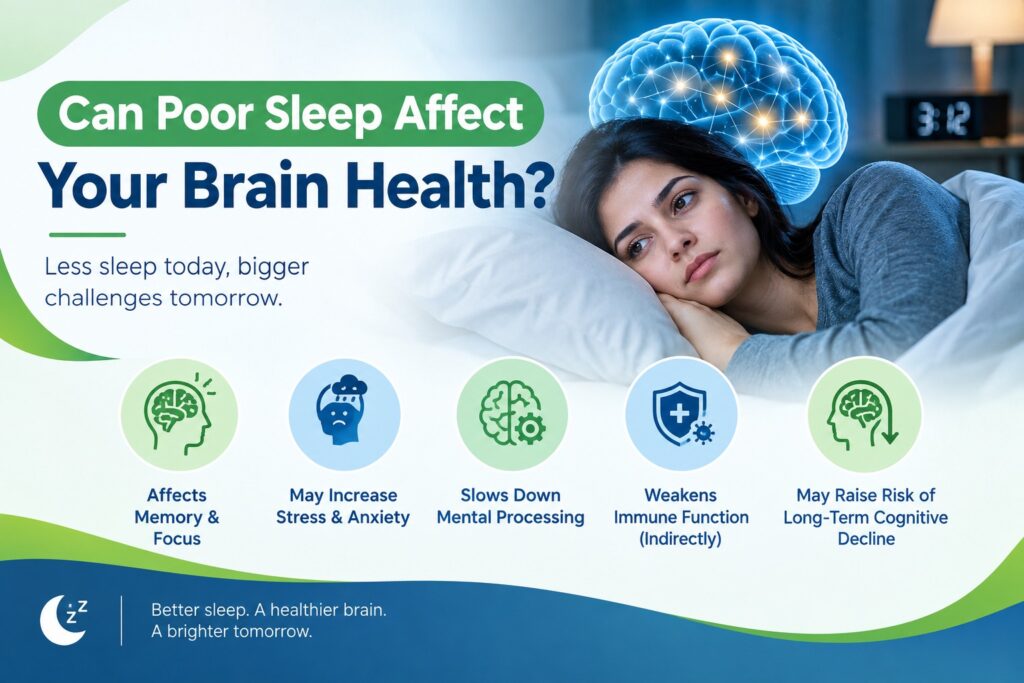
Think about a phone that never gets charged. It works for a while, then slows down, hangs, and finally shuts off. Your brain works in much the same way. Many patients walk into the clinic of a neurosurgeon saying, “Doctor, I’m always tired, forgetful, and irritable.” Very often, poor sleep is part of the story. During deep sleep, your brain clears out waste, stores memories, and repairs itself. Skip that process regularly, and the effects show up in your thoughts and feelings.
Can Lack of Sleep Really Affect Your Mental Health?
It can, and more than most people realise. One bad night makes you cranky. Weeks of bad nights can change how you think and feel.
How does it change your mood?
When you’re sleep-deprived, the part of the brain that handles emotions becomes overactive. Small problems feel big. You may snap at family, cry easily, or feel low without any clear reason.
Does it lead to anxiety and depression?
Research shows a two-way link. Poor sleep can trigger anxiety and depression, and those conditions can make sleep worse. It becomes a tiring loop.
If you’ve been feeling hopeless or persistently sad, please don’t ignore it. This is a health issue, not a weakness.
What happens to memory and concentration?
Sleep is when the brain files away what you learned during the day. Without it, you may forget names, misplace things, or struggle to focus at work or in studies.
Students, night-shift workers, and busy parents often notice this first.
What Are the Warning Signs to Watch For?
Your body usually gives hints before things get serious. Look out for:
- Trouble falling asleep or waking up many times at night
- Feeling exhausted even after a full night in bed
- Constant irritability or sudden mood swings
- Brain fog, poor memory, or slow thinking
- Loss of interest in things you used to enjoy
- Morning headaches
- Feeling anxious or restless for no clear reason
Having one of these occasionally is normal. Having several, for weeks, deserves attention.
Can Sleep Problems Be Linked to Brain or Spine Conditions?
Sometimes, yes. This is where a specialist’s view matters.
Not every sleep problem comes from stress or a busy routine. Certain medical conditions can disturb rest, including:
- Chronic back or neck pain from a slipped disc or spinal nerve pressure, which can make lying down uncomfortable
- Frequent headaches or migraines that wake you at night
- Head injuries, even old ones, which can change sleep patterns
- Brain tumours or raised pressure inside the head, which are rare but can cause morning headaches, vomiting, or vision changes
- Sleep apnoea, where breathing repeatedly pauses during sleep
Please don’t panic reading this list. Most sleep issues are not serious. But when sleep trouble comes with warning signs like severe headaches, numbness, weakness, or seizures, a proper check-up is important.
How Can You Sleep Better at Home?
You don’t need expensive gadgets. Small, steady changes often work best.
- Keep a fixed schedule. Sleep and wake up at the same time, even on weekends.
- Switch off screens early. Try to stop phone use 30 to 60 minutes before bed.
- Limit tea and coffee after afternoon.
- Make your room calm. Keep it dark, cool, and quiet.
- Move your body daily. A brisk walk helps, but avoid heavy exercise close to bedtime.
- Eat light at night. Heavy, spicy meals can disturb rest.
- Don’t fight sleep in bed. If you can’t sleep after 20 minutes, get up, sit quietly, and return when drowsy.
Be patient. It may take two to four weeks before you notice a real difference.
When Should You See a Neurosurgeon?
Seeing a doctor early is a sign of good self-care, not overreaction.
Consider booking a consultation if you notice:
- Headaches that are worsening or waking you from sleep
- Persistent neck or back pain that disturbs rest
- Tingling, numbness, or weakness in arms or legs
- Memory loss or confusion that is getting worse
- Sleep trouble after a head or spine injury
- Seizures or fainting episodes
A specialist can examine you, order the right tests if needed, and tell you whether the cause is simple or needs treatment. Many conditions are far easier to manage when found early.
Final Thoughts
Sleep isn’t a luxury. It’s medicine your body makes for free every night. When it goes missing, your mood, memory, and mental peace all pay the price.
The good news is that most sleep problems can be improved with healthy habits and the right guidance. And if something deeper is behind it, finding out early makes all the difference.
If poor sleep has been troubling you or someone you love, consider speaking with a neurosurgeon in Ahmedabad for a proper evaluation. You don’t have to keep struggling alone.