
Advanced Deep Brain Stimulation in India
What Is Deep Brain Stimulation?
Deep Brain Stimulation is a form of functional neurosurgery that regulates abnormal electrical activity within specific brain circuits involved in movement.
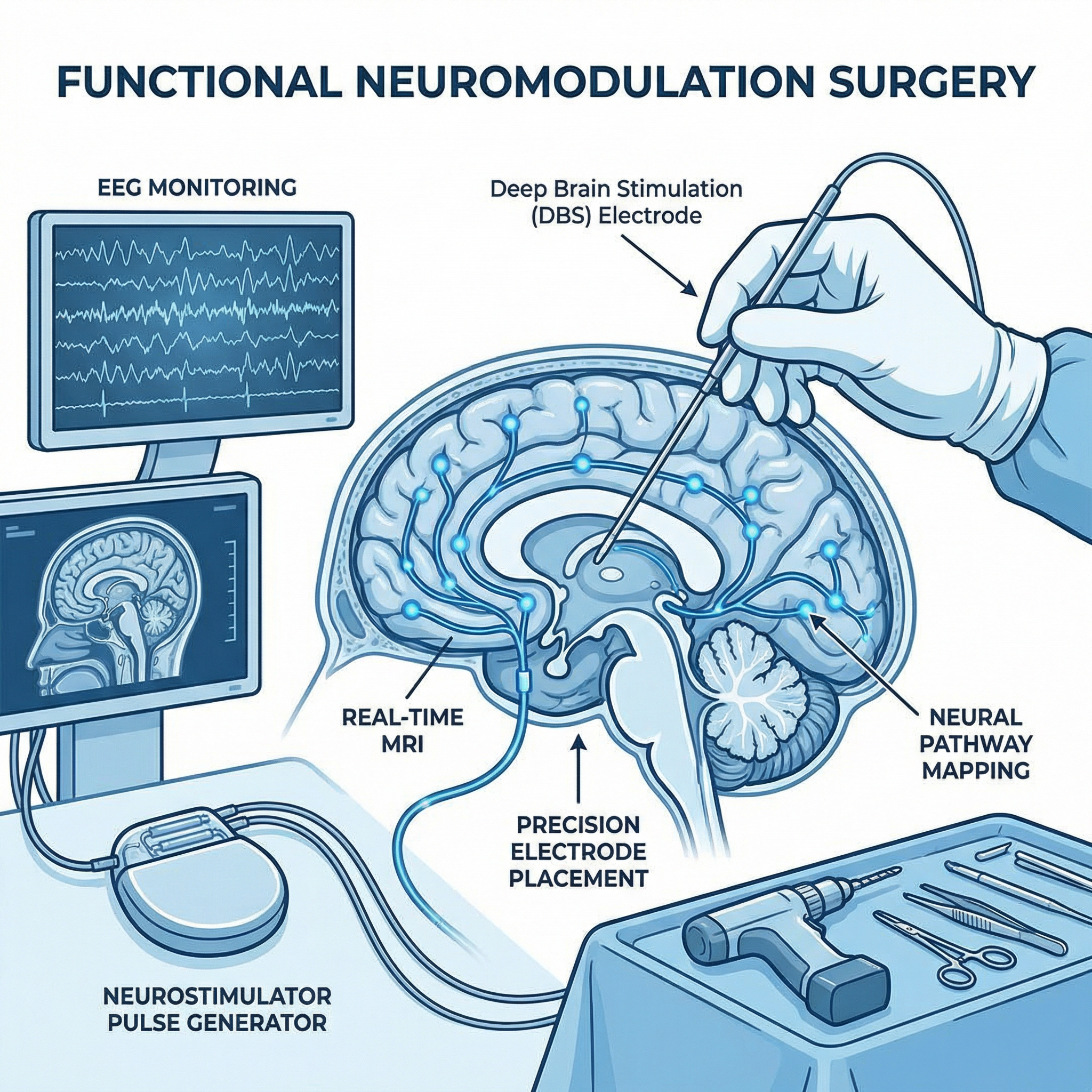
During DBS surgery, electrodes are placed in carefully selected brain targets. These electrodes are connected to a pulse generator implanted under the skin, usually in the chest. The device sends controlled electrical impulses to the electrodes.
The stimulation settings can be adjusted after surgery according to the patient’s symptoms and response to treatment.
A DBS system consists of:
Brain electrodes
placed in a specific target area of the brain
Extension wires
connect the electrodes to the pulse generator
Pulse generator
implanted under the skin and delivers electrical stimulation
The stimulation can be adjusted after surgery according to the patient’s symptoms and response.
Who Can Benefit From DBS?
DBS may be considered when symptoms remain difficult to control despite appropriate medicines.
It can be evaluated for patients who have:
- Persistent or disabling tremor
- Parkinson’s disease with troublesome motor symptoms
- Wearing-off or significant fluctuations between medication doses
- Dyskinesia related to Parkinson’s disease treatment
- Dystonia causing abnormal movements or postures
- Movement symptoms that significantly interfere with daily activities
Not every patient with a movement disorder is suitable for DBS. Careful neurological assessment is required before surgery.
Conditions Treated With DBS
Parkinson’s Disease
DBS may help control tremor, stiffness, slowness of movement, motor fluctuations and dyskinesia in appropriately selected patients.
Essential Tremor
For patients with severe tremor that does not respond adequately to medication, DBS can reduce shaking and improve activities such as writing, eating and drinking.
Dystonia
DBS may be considered when involuntary muscle contractions and abnormal postures caused by dystonia remain difficult to control with medicines.
The expected response varies according to the type, cause and duration of the condition.
How Is Deep Brain Stimulation Surgery Performed?
DBS surgery involves careful planning before the electrodes are implanted.
Detailed Evaluation
The diagnosis, symptoms, medication response, medical history, and functional limitations are assessed.

Brain Imaging
MRI and other appropriate investigations help assess brain anatomy and plan the surgical targets.

Selection of the DBS Target
The appropriate brain target is selected according to the neurological condition and the patient's symptoms.

Electrode Placement
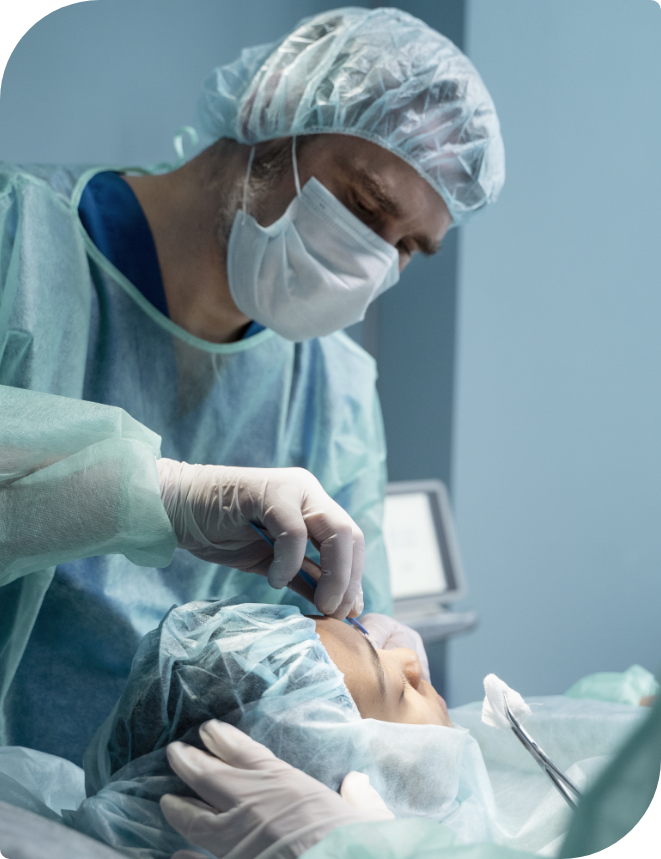
Thin DBS electrodes are carefully placed in the selected areas of the brain.

Pulse Generator Implantation
The electrodes are connected to a pulse generator implanted beneath the skin.

Programming and Follow-Up
After surgery, the stimulation settings are adjusted according to symptom response. Medication may also be modified when appropriate.
Recovery and Follow-Up After DBS
Patients are monitored after surgery for recovery and any early complications. The timing of DBS activation and programming varies according to the individual treatment plan.
Follow-up is an important part of DBS treatment and may involve:
DBS programming
Medication adjustment
Monitoring symptom improvement
Assessment of stimulation-related side effects
Device checks
Long-term neurological follow-up
The aim is to find stimulation settings that provide the best possible symptom control while limiting unwanted effects.
Why Choose Dr. Chirag N. Solanki for Deep Brain Stimulation?
Dr. Chirag N. Solanki is a Senior Neurosurgeon and Functional & Epilepsy Surgery Specialist with specialized training in functional neurosurgery.
His qualifications include:
- MBBS – B. J. Medical College, Ahmedabad
- MS (General Surgery) – B. J. Medical College, Ahmedabad
- M.Ch. (Neurosurgery) – NIMHANS, Bengaluru
- Fellowship in Functional Neuromodulation Surgery – John Radcliffe Hospital, Oxford, UK
- Fellowship in Neuroendoscopy & Minimally Invasive Brain/Spine Surgery – NSCB, India
His functional neurosurgical practice includes DBS, movement disorders, and epilepsy surgery. His profile also records specialized fellowship training in Functional Neuromodulation Surgery and the establishment of a dedicated Functional Neuromodulation Surgery program in Gujarat.
Deep Brain Stimulation Treatment in India
Patients from across India can be evaluated for DBS when Parkinson’s disease, essential tremor, dystonia, or another movement disorder remains difficult to control with medication.
The treatment process generally involves:
Neurological Evaluation
DBS Assessment
Imaging & Testing
Surgical Planning
DBS Surgery
Programming
Long-Term Follow-Up
Frequently Asked Questions About Deep Brain Stimulation
Find clear and reliable answers to common questions about Functional Neuromodulation Surgery in Ahmedabad, treatment approach, and patient care under Dr. Chirag N. Solanki.
No. DBS does not cure Parkinson’s disease or stop its progression. It is used to control selected motor symptoms.
Yes. DBS can be considered for selected patients with disabling essential tremor that does not respond adequately to medicines.
DBS may be suitable for certain patients with medically difficult-to-control dystonia. The expected benefit depends on the type and cause of dystonia.
Many patients continue taking medicines after DBS. Medication requirements may change depending on the condition and response to stimulation.
Yes. DBS programming is an important part of treatment. Settings are adjusted according to the patient's symptoms and response.
DBS is an established neurosurgical treatment, but like any brain surgery, it carries potential risks. Careful patient selection and surgical planning are important.
If Parkinson’s disease, essential tremor, dystonia, or another movement disorder continues to interfere with daily activities despite medication, a specialist evaluation can determine whether Deep Brain Stimulation may be appropriate.
Consult Dr. Chirag N. Solanki, Senior Neurosurgeon and Functional & Epilepsy Surgery Specialist, for evaluation and treatment planning.