
Brain RF Ablation in India
What Is Brain RF Ablation?
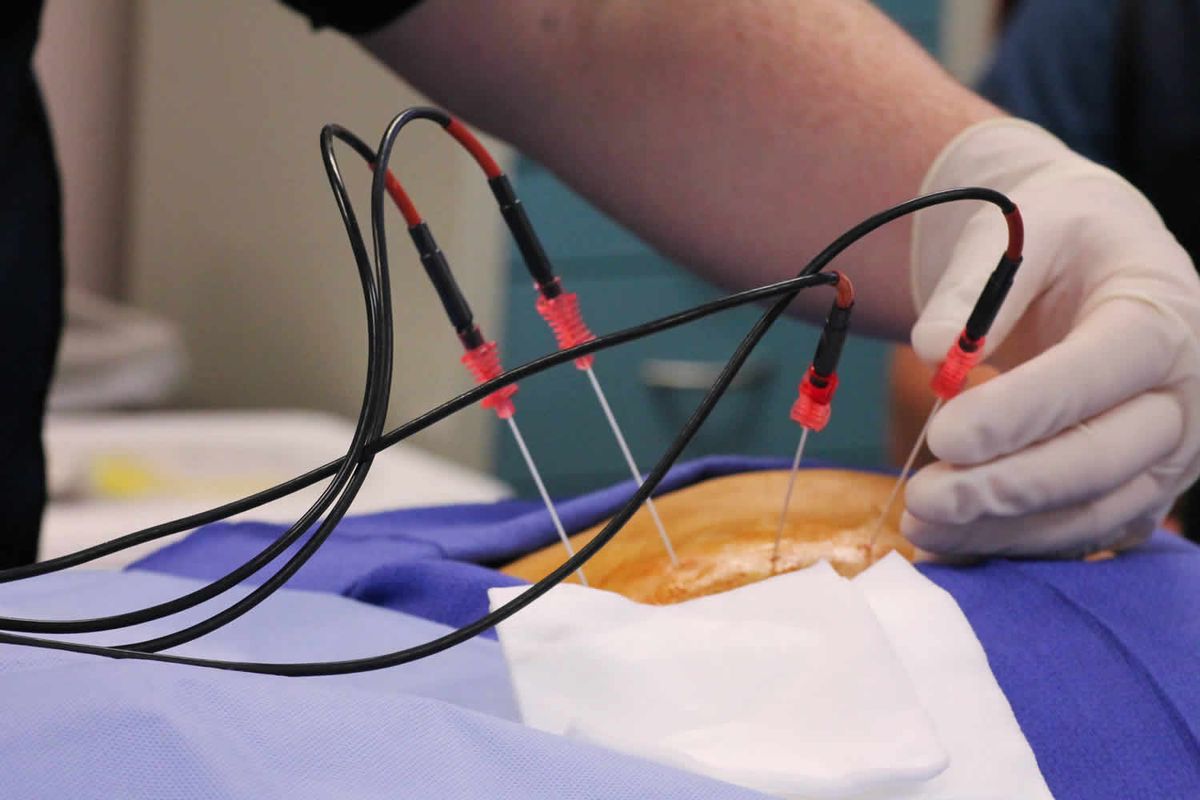
Brain RF Ablation, also known as radiofrequency lesioning, is a stereotactic neurosurgical procedure in which controlled heat is used to treat a precisely identified area of the brain.
The treated area is selected according to the patient’s neurological condition and symptoms. By interrupting abnormal activity within the targeted brain circuit, RF ablation can reduce involuntary movement or tremor.
It is mainly considered for selected patients with:
Essential tremor
Tremor-dominant movement disorders
Selected Parkinson’s disease symptoms
Other movement disorders requiring lesion-based treatment
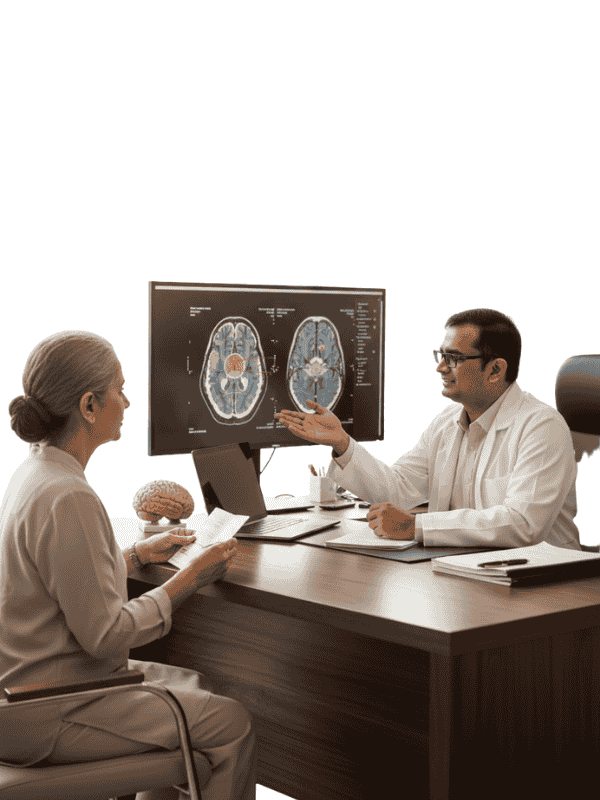
A detailed neurological assessment and brain imaging are performed before deciding whether RF ablation is appropriate.
When Is Brain RF Ablation Recommended?
Brain RF Ablation may be considered when tremor or other abnormal movements continue to interfere with everyday activities despite medical treatment.
Common problems may include:
- Tremor affecting writing or eating
- Difficulty holding a cup or using utensils
- Tremor interfering with work
- Symptoms not adequately controlled with medicines
- Medication-related side effects
- Persistent disabling tremor affecting daily independence
The treatment plan depends on the diagnosis, severity of symptoms, response to medication, and findings from the neurological evaluation.
How Is Brain RF Ablation Performed?
Brain RF Ablation is performed using stereotactic surgical planning to accurately identify the treatment target.
Neurological Assessment
The type, severity, distribution, and functional effect of the tremor are assessed.
Brain Imaging
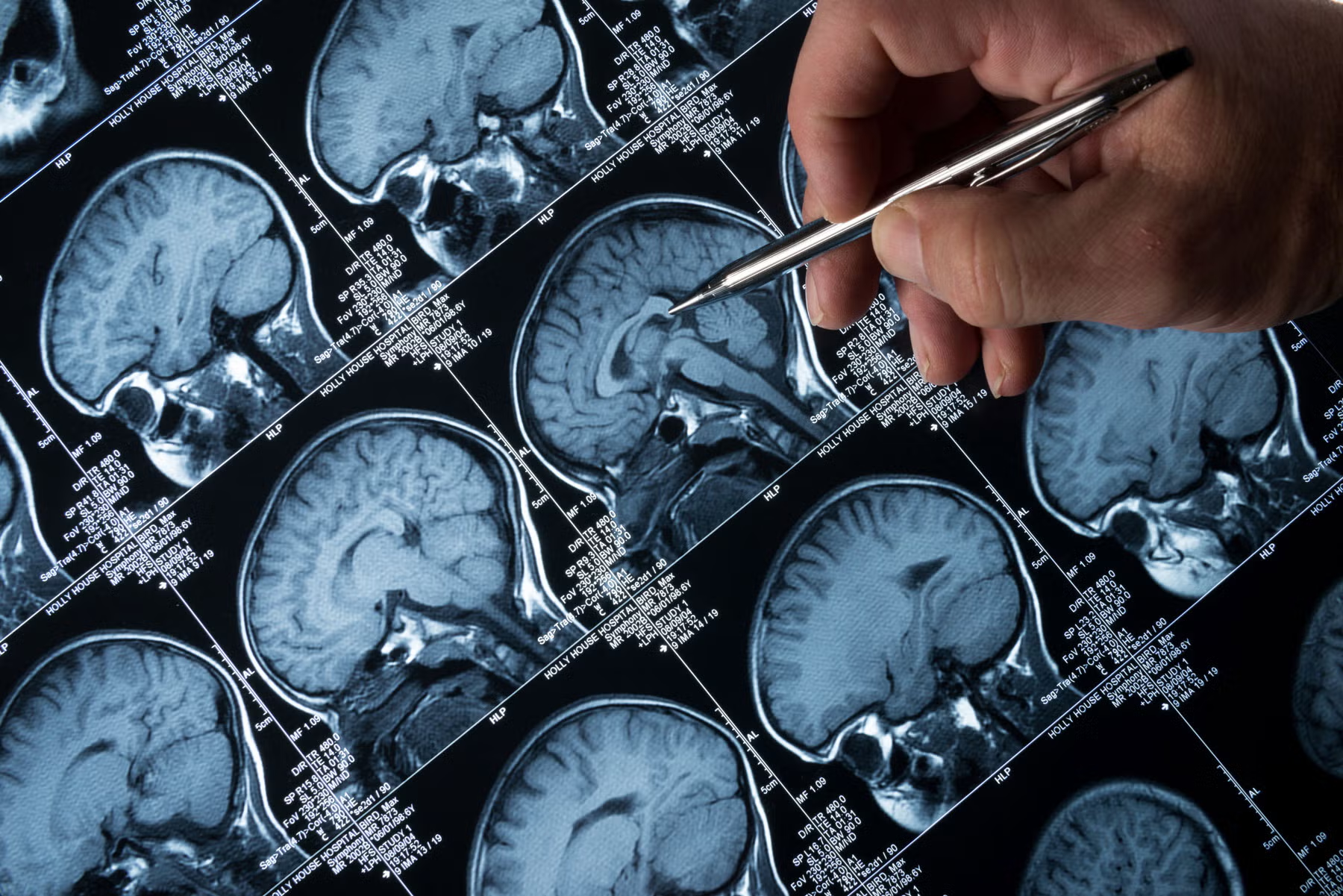
MRI and other imaging are used to study brain anatomy and plan the target.

Stereotactic Planning
The exact treatment coordinates are calculated according to the selected brain target.

Electrode Placement
A thin electrode is guided to the planned area of the brain.

Radiofrequency Treatment
Controlled radiofrequency energy is delivered to create a small lesion in the targeted tissue.

Post-Treatment Monitoring
The patient is monitored after the procedure and receives appropriate follow-up.
Recovery After Brain RF Ablation
Recovery depends on the treatment performed and the patient's individual condition.
After the procedure, neurological function and the treated symptoms are monitored. Follow-up appointments help assess symptom control and recovery.
Patients may receive instructions regarding:
Activity after surgery
Medication adjustment
Wound care
Neurological monitoring
Follow-up assessment
Why Choose Dr. Chirag N. Solanki for Brain RF Ablation?
Dr. Chirag N. Solanki is a Senior Neurosurgeon and Functional & Epilepsy Surgery Specialist with specialized training in functional neurosurgery.
His qualifications include:
- MBBS – B. J. Medical College, Ahmedabad
- MS (General Surgery) – B. J. Medical College, Ahmedabad
- M.Ch. (Neurosurgery) – NIMHANS, Bengaluru
- Fellowship in Functional Neuromodulation Surgery – John Radcliffe Hospital, Oxford, UK
- Fellowship in Neuroendoscopy & Minimally Invasive Brain/Spine Surgery – NSCB, India
His practice includes functional neurosurgery and surgical treatment of movement disorders. His profile records specialized functional neuromodulation training and the establishment of a Functional Neuromodulation Surgery program in Gujarat.
Brain RF Ablation Treatment in India
Patients from across India can seek specialist evaluation for disabling tremor and movement disorders that remain difficult to control with medication.
The treatment process generally includes:
Neurological Evaluation
Imaging
Stereotactic Planning
RF Ablation
Recovery & Follow-Up
Frequently Asked Questions About Brain RF Ablation
Find clear and reliable answers to common questions about Functional Neuromodulation Surgery in Ahmedabad, treatment approach, and patient care under Dr. Chirag N. Solanki.
Yes. It can be used in selected patients with disabling tremor, particularly when medication does not provide adequate control.
No. RF ablation creates a small permanent lesion, whereas DBS uses an implanted device to deliver adjustable electrical stimulation.
The target is selected using the patient's diagnosis, neurological findings, brain imaging, and stereotactic surgical planning.
Recovery varies according to the procedure and individual patient. The treating team provides specific post-operative instructions.
It may be considered for selected Parkinson’s disease symptoms, depending on the patient's condition and treatment goals.
If disabling tremor or another movement disorder continues despite medication, specialist evaluation can help determine whether Brain RF Ablation or another treatment option may be appropriate.