Can a Brain Tumor Return After Successful Surgery?
Introduction
Hearing “the surgery was successful” is a huge relief, but for many patients and families, a quiet worry follows soon after: can the tumor come back? It’s a fair question, and the honest answer is — sometimes, yes. Understanding why, and what can be done about it, makes a real difference in how patients approach recovery after brain tumor surgery in Ahmedabad.
So, Can It Really Come Back?
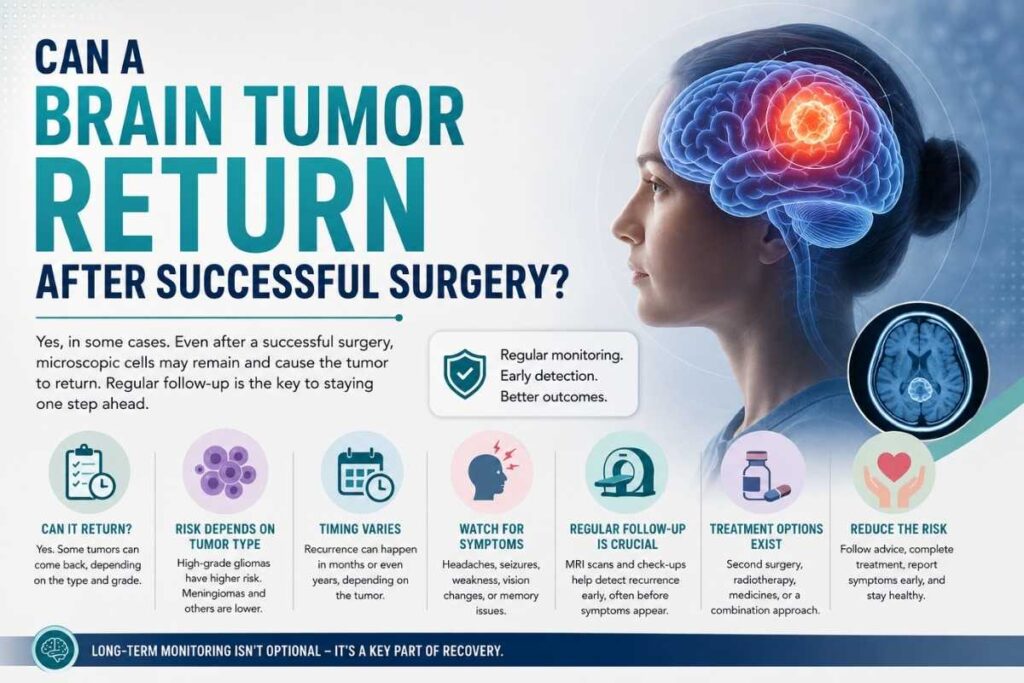
Yes, in some cases. A “successful” surgery generally means the visible tumor was safely removed and the patient recovered well, without major neurological damage. It does not always mean every single tumor cell is gone. Some tumors, especially certain gliomas, have microscopic extensions into surrounding brain tissue that aren’t visible even on the best imaging. Over time, these cells can grow back into a new tumor. Recurrence isn’t a sign that the surgery failed. It’s simply how certain tumor types behave, and it’s one reason why long-term follow-up is treated as seriously as the operation itself.
Which Tumors Are More Likely to Return?
Not all brain tumors carry the same recurrence risk. Broadly speaking, high-grade gliomas (like glioblastoma) have the highest chance of recurrence, often within months to a couple of years, even after complete surgical removal and follow-up radiotherapy or chemotherapy. Low-grade gliomas can also recur, but usually over a longer period, sometimes several years later. Meningiomas, which are typically benign, have a lower recurrence rate, especially when fully removed, though incomplete removal near critical structures can raise the risk. Pituitary tumors and acoustic neuromas generally have good long-term control after surgery, with recurrence being relatively less common. Metastatic brain tumors, tumors that have spread from cancer elsewhere in the body, carry a different risk profile altogether, tied closely to how the primary cancer is being managed.
This is exactly why tumor type and grade, confirmed through histopathology after surgery, shape the entire follow-up plan.
How Soon Can Recurrence Happen?
Timing varies widely depending on the tumor. Aggressive, high-grade tumors can recur within months to a couple of years of surgery, even with the best surgical and medical management. Slower-growing, benign tumors may take much longer to return, sometimes not at all, if fully removed. This range is one reason follow-up schedules are rarely one-size-fits-all; they’re tailored to the specific tumor’s behavior.
Signs That Could Indicate Recurrence
Patients recovering from brain tumor surgery are usually advised to watch for a return of earlier symptoms like headaches or seizures, new weakness, numbness, or coordination issues, vision or speech changes, personality or memory changes that weren’t there before, and persistent nausea or vomiting. None of these symptoms automatically mean recurrence, but they should never be ignored. A prompt MRI scan is usually the fastest way to check.
How Recurrence Is Detected Early
Regular follow-up imaging is the single most important tool for catching recurrence early, often before symptoms even appear. A typical follow-up schedule includes MRI scans at set intervals, commonly every 3-6 months in the first couple of years, spacing out later, clinical neurological check-ups to track any subtle changes, and blood tests or hormonal panels, if the tumor type requires it, as with pituitary tumors. Sticking to this schedule, even when a patient feels completely fine, is one of the most practical things they can do for long-term outcomes.
What Happens If a Tumor Comes Back?
A recurrence doesn’t always mean starting from zero. Depending on the tumor’s location, size, and the patient’s overall health, treatment options can include a second surgery, if the tumor is accessible and the patient is fit for another procedure, radiotherapy, including targeted techniques for tumors that can’t be fully removed again, chemotherapy or newer targeted drug therapies, depending on tumor type, and a combination approach, coordinated between neurosurgery and oncology teams. Patients who’ve already been through Brain Tumor Surgery in Ahmedabad once often find that having an established relationship with their neurosurgical team makes managing a recurrence far less overwhelming the second time around.
Reducing the Risk Where Possible
While recurrence can’t always be prevented, a few things genuinely help: never skipping scheduled follow-up scans, even years after surgery, completing the full course of any recommended radiotherapy or chemotherapy, reporting new symptoms early instead of waiting them out, and maintaining overall health through good sleep, nutrition, and stress management.
Dr. Chirag Solanki, a fellowship-trained neurosurgeon with experience across thousands of neurosurgical procedures, often points out that the months and years after surgery matter just as much as the operation itself. Long-term monitoring is what catches problems while they’re still manageable.
Final Thoughts
Some brain tumors can return, even after successful surgery, and tumor type and grade largely determine that risk. Regular MRI follow-ups are key to catching recurrence early, and treatment options exist even if a tumor does come back. Long-term monitoring is a core part of care, not something to skip once a patient starts feeling better.
If you or a loved one is due for a follow-up after brain tumor surgery in Ahmedabad, don’t delay your scheduled scans. Book a consultation with Dr. Chirag Solanki’s team to stay ahead of any changes and keep your recovery on track.