What Can You Eat After Brain Tumor Surgery?
Introduction
Brain surgery changes more than just your health reports — it changes your daily routine too, and food is often the first thing families worry about. If your loved one has just gone through, or is about to go through, brain tumor surgery in Ahmedabad, you’re probably wondering what to cook, what to avoid, and how soon normal eating can resume. This guide breaks it down in plain, practical terms.
What Does "Minimally Invasive" Actually Mean?
Conditions in Children That May Qualify for Minimally Invasive Treatment
The brain uses a huge share of the body’s energy, even more so while it’s healing. The right food after surgery isn’t just about comfort — it directly supports tissue repair, reduces swelling, and helps the immune system fight off infection at the incision site. Patients who eat well in the first few weeks tend to recover strength and mental clarity faster than those who don’t pay attention to nutrition.
That said, every patient is different. Tumor location, the type of surgery performed, and any additional treatment like radiotherapy or chemotherapy can all change what’s suitable to eat. This is why post-operative diet plans should always be discussed with your treating neurosurgeon rather than followed generically.
Why Diet Matters So Much After Brain Surgery
Children aren’t just small adults, their bodies respond differently to surgery and heal at a different pace. Here’s why a less invasive approach often makes a real difference for younger patients:
- Faster recovery. Children often bounce back quicker than adults already, and smaller incisions speed this up even further.
- Less pain after surgery. Smaller surgical sites generally mean less postoperative discomfort, which matters a lot for younger patients who may struggle to communicate pain levels.
- Shorter hospital stays. Many minimally invasive pediatric procedures allow children to go home sooner, which is easier on both the child and the family.
- Reduced scarring. Smaller incisions naturally heal with less visible scarring, something parents often appreciate for their child’s long-term comfort and confidence.
- Lower risk of certain complications. Less disruption to surrounding tissue can mean reduced risk of infection and blood loss during surgery.
That said, minimally invasive surgery isn’t automatically the “easier” option, it requires a surgeon with specialized training and experience in these precise techniques. Not every hospital or surgeon offers this level of expertise, which is why choosing the right specialist matters so much.
The First Few Days: Start Slow
Right after surgery, most patients are still groggy from anesthesia, and the digestive system needs time to “wake up.” Hospitals usually begin with clear fluids like coconut water, diluted fruit juice, or clear soup, then move to soft, semi-solid foods such as khichdi, dal water, mashed potatoes, or porridge. Small, frequent meals work better than three large ones, since nausea is common in the first 48 hours. Only once the patient can swallow comfortably and shows no signs of vomiting does the diet progress to regular soft food.
How Soon Can You Eat Normal Food?
Most patients move from liquids to soft food within 24 to 48 hours, and to regular meals within a week, depending on how quickly recovery progresses. This isn’t a fixed rule, though; it depends entirely on how the patient responds, so the treating team usually confirms readiness before advancing the diet further.
Foods That Support Brain Healing
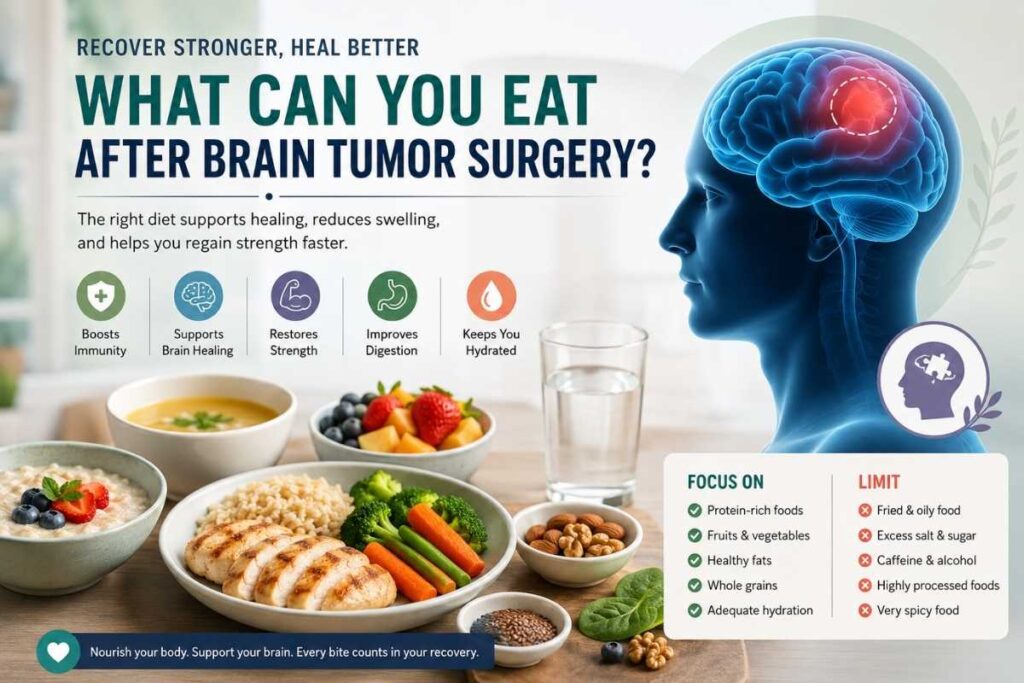
Once the patient is stable and back home, the focus shifts to nutrient-dense foods that actively help recovery. Protein-rich foods like eggs, paneer, moong dal, chicken, and fish help repair tissue and rebuild strength, and protein is arguably the single most important nutrient during this phase. Fruits and vegetables such as berries, papaya, spinach, and carrots are rich in antioxidants that help reduce inflammation around the surgical site. Healthy fats from walnuts, flaxseeds, and a moderate amount of ghee or olive oil support nerve function and hormone balance. Whole grains like brown rice, oats, and whole wheat rotis provide steady energy and help prevent constipation, a common issue after surgery due to reduced mobility and pain medication. And staying hydrated with plain water, buttermilk, and ORS solutions helps flush out anesthesia by-products and keeps the body functioning smoothly.
Foods to Avoid After Surgery
Some foods can slow healing or interfere with medication, so it’s best to keep these limited: heavily fried and oily food, which can cause bloating and nausea, excess salt, which may worsen swelling, sugary snacks and packaged foods that offer little nutritional value, alcohol and caffeine, both of which can interact with medication and disturb sleep, and very spicy food, especially if the patient is on steroids that already affect the stomach lining.
Special Notes for Patients on Steroids
Many patients recovering from brain tumor removal are prescribed steroids to control swelling. Steroids can raise blood sugar and appetite, so portion control and lower-sugar meal choices become important. If you notice unusual weight gain, mood changes, or blood sugar spikes, flag it with your doctor rather than adjusting the diet on your own.
When Should You Consult a Specialist?
Diet recommendations here are general guidance, not a replacement for medical advice. If swallowing difficulty, persistent vomiting, or unexplained weight loss continues beyond the first week, it needs prompt attention. Patients undergoing Brain Tumor Surgery in Ahmedabad are usually given a personalized nutrition plan by their surgical team based on tumor type, surgical approach, and overall health, and sticking to that plan gives the best results.
Dr. Chirag Solanki, a fellowship-trained neurosurgeon with experience across thousands of neurosurgical procedures, emphasizes that recovery is not just about the operation itself but the weeks that follow it. A well-planned diet, combined with regular follow-up, plays a real role in how quickly patients regain their strength and independence.
Quick Recap
Start with liquids, move to soft food, then regular meals. Prioritize protein, fruits, vegetables, and healthy fats, while limiting fried food, excess sugar, salt, and caffeine. Keep an eye on steroid-related appetite and blood sugar changes, and always follow the specific plan given by your neurosurgery team.
If you or a family member needs guidance on recovery after brain tumor surgery in Ahmedabad, book a consultation with Dr. Chirag Solanki’s team for a diet and recovery plan tailored to your specific case.