Are Minimally Invasive Pediatric Neurosurgery Options Available?
Introduction
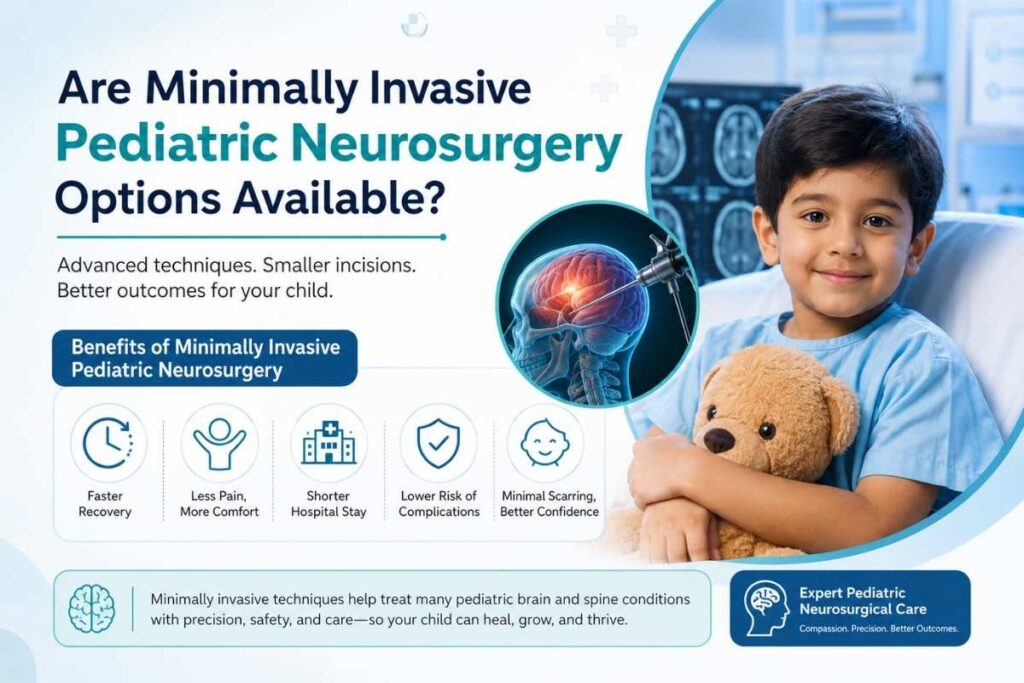
Finding out your child needs brain or spine surgery is one of the hardest moments a parent can go through. The first question that usually comes to mind isn’t about the diagnosis itself; it’s “does my child really need a big surgery?” Thankfully, the answer today is often more reassuring than it used to be. Thanks to advances in technology and technique, many neurological conditions in children can now be treated with smaller incisions, shorter hospital stays, and faster recovery times.
If you’re researching paediatric neurosurgery in Ahmedabad, this guide walks you through what minimally invasive options actually look like, which conditions qualify, and how to know if your child is a good candidate. The information here is based on the clinical approach followed by Dr. Chirag Solanki, a fellowship-trained neurosurgeon who has performed thousands of procedures, including complex pediatric cases.
What Does "Minimally Invasive" Actually Mean?
The term gets used a lot, but in practice, it refers to surgical techniques that avoid large openings in the skull or spine. Instead, surgeons use smaller incisions, specialized instruments, and advanced imaging to reach the affected area with far less disruption to surrounding healthy tissue.
For children specifically, this matters even more than it does for adults. A child’s brain and spine are still developing, and minimizing trauma during surgery helps protect that ongoing growth. Less tissue disruption generally means less pain, lower infection risk, and quicker return to normal activities like school and play.
Conditions in Children That May Qualify for Minimally Invasive Treatment
Not every pediatric neurological condition can be treated this way, but a good number can, depending on the size, location, and nature of the problem. Some examples include:
- Hydrocephalus. Many children with fluid buildup around the brain can be treated with endoscopic procedures rather than traditional shunt surgery in select cases, reducing long-term complications.
- Certain brain tumors. Tumors located in accessible areas can sometimes be removed using keyhole or endoscopic approaches, depending on size and proximity to critical structures.
- Craniosynostosis. This condition, where the skull bones fuse too early, can sometimes be corrected using endoscopic strip craniectomy in younger infants, which involves much smaller incisions than open skull surgery.
- Spinal conditions. Certain spine abnormalities and tethered cord conditions can be addressed with more focused, less invasive surgical approaches.
- Drug-resistant epilepsy. In specific cases, minimally invasive techniques can help locate and treat the area of the brain causing seizures.
Every child’s anatomy and condition is different, which is why a thorough diagnostic workup always comes before deciding on the surgical approach.
Why Minimally Invasive Surgery Benefits Children Specifically
Children aren’t just small adults, their bodies respond differently to surgery and heal at a different pace. Here’s why a less invasive approach often makes a real difference for younger patients:
- Faster recovery. Children often bounce back quicker than adults already, and smaller incisions speed this up even further.
- Less pain after surgery. Smaller surgical sites generally mean less postoperative discomfort, which matters a lot for younger patients who may struggle to communicate pain levels.
- Shorter hospital stays. Many minimally invasive pediatric procedures allow children to go home sooner, which is easier on both the child and the family.
- Reduced scarring. Smaller incisions naturally heal with less visible scarring, something parents often appreciate for their child’s long-term comfort and confidence.
- Lower risk of certain complications. Less disruption to surrounding tissue can mean reduced risk of infection and blood loss during surgery.
That said, minimally invasive surgery isn’t automatically the “easier” option, it requires a surgeon with specialized training and experience in these precise techniques. Not every hospital or surgeon offers this level of expertise, which is why choosing the right specialist matters so much.
How Do You Know If Your Child Is a Candidate?
This is where proper diagnosis becomes critical. Before recommending any surgical approach, a pediatric neurosurgeon needs a clear picture of the condition through:
- Child-friendly MRI and CT imaging
- Neurosonography for infants
- EEG and detailed neurological evaluations
- Pre-operative assessment specific to the child’s age and condition
Based on these results, the surgical team can determine whether a minimally invasive approach is appropriate, or whether the condition requires a more traditional surgical method for safety reasons. The goal is always the same: choosing the approach that gives the best possible outcome with the least risk to the child.
What Recovery Looks Like After Minimally Invasive Pediatric Surgery
One of the most reassuring things for parents to hear is that children generally recover faster than adults from neurosurgical procedures. After a minimally invasive surgery, most children:
- Spend a shorter time in the hospital, often just a few days depending on the procedure
- Experience less pain than they would after open surgery
- Return to normal activities, including school, sooner
- Require regular follow-up visits to track development and confirm the condition is resolving as expected
Parents are typically guided through every stage of this recovery process, including what symptoms to watch for and when to schedule follow-up imaging or evaluations.
Why Experience Matters So Much in Pediatric Neurosurgery
Operating on a child’s developing nervous system requires a different level of precision compared to adult neurosurgery. Dr. Chirag Solanki brings a strong foundation for this kind of care, trained at NIMHANS, one of India’s leading neuroscience institutes, with further fellowship training in Functional Neuromodulation Surgery from Oxford, UK. With experience across thousands of neurosurgical procedures, his approach to pediatric cases focuses on accurate diagnosis, age-appropriate treatment planning, and minimizing surgical trauma wherever medically possible.
This combination of advanced training and a genuinely compassionate, family-centered approach is what parents should look for when searching for Paediatric Neurosurgery in Ahmedabad. Technical skill matters, but so does a surgeon who takes the time to explain the condition clearly and involve parents in every decision.
Final Thoughts
Minimally invasive options are genuinely available for many pediatric neurological conditions today, and they offer real benefits in terms of recovery time, pain, and overall experience for both child and family. That said, not every case qualifies, and the right approach depends entirely on an accurate diagnosis and an experienced surgical team.
If your child has been diagnosed with a neurological condition, or you’re noticing symptoms like developmental delays, seizures, or unusual head growth, getting an expert evaluation early can make a significant difference in long-term outcomes.