
What Tests Detect Spinal Tumors?
Introduction
Back pain is something most people brush off. It happens after a long day, a bad sleep, or lifting something heavy. But when back pain comes with weakness, numbness, or trouble controlling your bladder or bowel, it’s worth taking seriously. Sometimes the cause isn’t muscular at all. It’s a tumor growing in or around the spinal cord.
The good news is that spinal tumors can be detected early with the right tests, and early detection changes everything about treatment outcomes and long-term recovery.
Why Spinal Tumors Are Often Missed at First
Spinal tumors don’t always announce themselves clearly. Early symptoms can look like ordinary back strain or sciatica, which is exactly why many cases go undiagnosed for months. Pain that doesn’t improve with rest, weakness in the arms or legs, balance trouble, or progressive numbness are the signs that should prompt a proper neurological evaluation rather than another round of painkillers or physiotherapy alone.
The Tests That Actually Detect Spinal Tumors
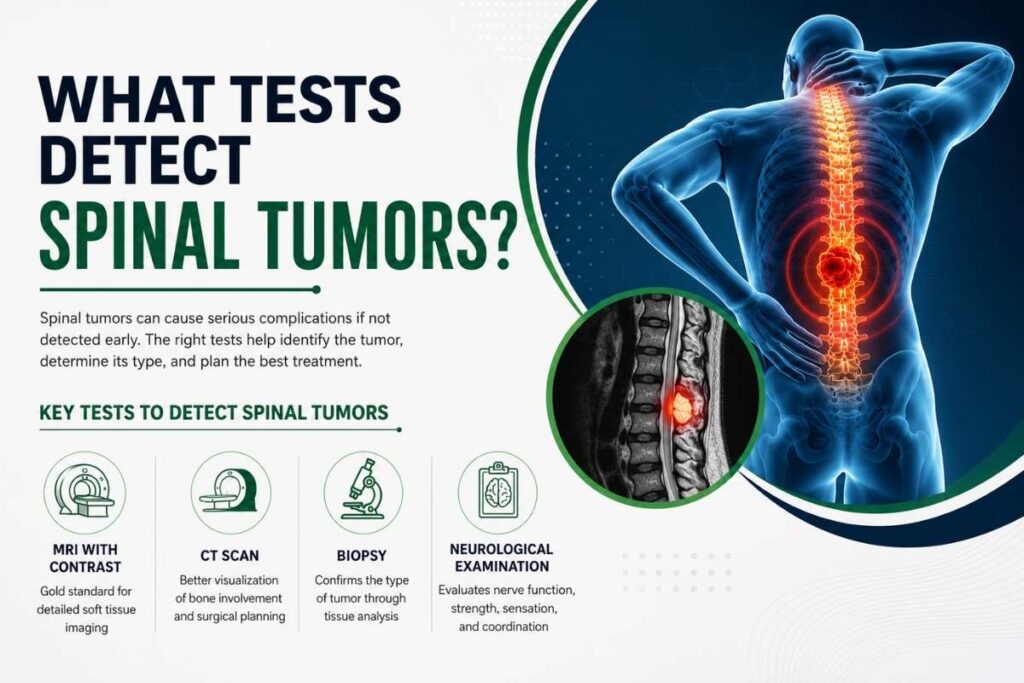
When a spinal tumor is suspected, doctors don’t rely on guesswork. A combination of imaging and clinical tests builds the full picture. MRI with contrast is the gold standard here. It shows soft tissue detail clearly enough to reveal a tumor’s exact location, size, and how close it sits to the spinal cord and nerves. This is usually the first and most informative test ordered, and it forms the basis for every decision that follows.
CT scans are often used alongside MRI, particularly when doctors need a clearer look at bone involvement or are planning the surgical approach. A biopsy may follow imaging if there’s uncertainty about whether the tumor is benign or malignant. Histopathological evaluation gives doctors the exact tissue diagnosis, which directly shapes the treatment plan and helps avoid unnecessary surgery.
A full neurological examination still matters too. Reflexes, strength, sensation, and coordination tests help doctors understand how much the tumor is already affecting nerve function, which guides how urgently treatment needs to happen.
Why Getting the Right Diagnosis Early Matters
A delayed diagnosis on a spinal tumor isn’t just inconvenient. Pressure on the spinal cord can cause permanent nerve damage if it goes untreated for too long, sometimes affecting mobility or bladder control in ways that don’t fully reverse. This is why doctors performing Spine Tumor Surgery in Ahmedabad emphasize early imaging the moment red-flag symptoms appear, rather than waiting to see if things improve on their own.
What Happens After Diagnosis
Once imaging confirms a spinal tumor, the next step depends on its type, location, and how it’s behaving. Dr. Chirag Solanki, a fellowship-trained neurosurgeon from NIMHANS and Oxford with experience across thousands of neurosurgical procedures, evaluates each case individually before recommending a path forward. Some tumors are monitored closely if they’re small and not causing symptoms. Others, especially ones pressing on the spinal cord or causing progressive weakness, need surgical removal sooner rather than later.
Modern surgical techniques focus on removing the tumor while protecting the surrounding nerves and spinal structures as much as possible. Microsurgical precision, neuro-navigation guidance, and careful pre-operative planning based on the imaging results all play a role in keeping that balance between safe removal and function preservation.
Questions to Ask If a Spinal Tumor Is Suspected
Before any procedure, it’s reasonable to ask your doctor a few direct questions. What type of tumor does the imaging suggest? Is it pressing on the spinal cord? What are the risks of waiting versus treating now? What does recovery typically look like for a case like mine, and how long before normal activity resumes?
A specialist who explains these clearly, without rushing past your concerns, is someone worth trusting with this decision.
Don't Wait on Red-Flag Symptoms
If back pain comes with weakness, numbness, or any change in bladder or bowel control, get it checked without delay. Spinal tumors caught early through proper imaging have far better outcomes than ones found late, both in terms of surgical safety and long-term nerve recovery. For anyone exploring options around spine tumor surgery in Ahmedabad, a timely MRI and an honest conversation with an experienced specialist is the right place to start.